-
ALBUM REVIEW: ANNIE KEATING — ‘BRISTOL COUNTY TIDES’
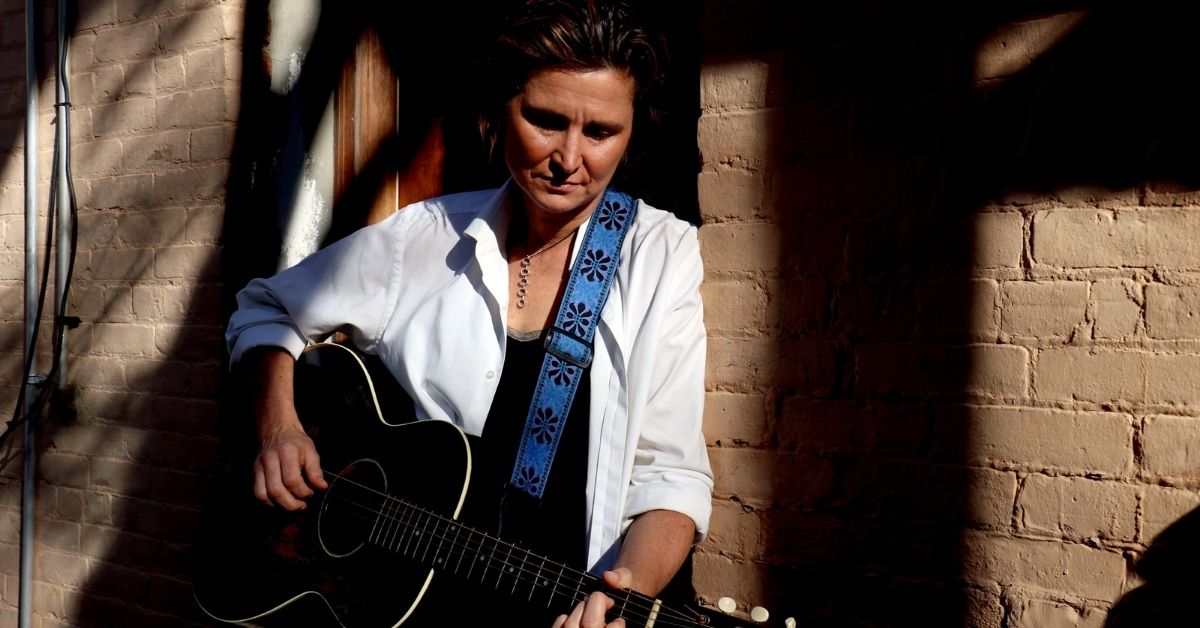

Storytelling songwriting takes center stage on Annie Keating’s recently released Bristol County Tides. The album serves as an intimate journal of the writer’s contemplation of change, fear, and melancholy that swept over her and the world during the early days of the pandemic. Fleeing densely populated Brooklyn and taking refuge in Bristol County in coastal Massachusetts, Keating found inspiration in isolation and put her thoughts to good use through masterful lyrical crafting. All of this may lead a listener to prepare for a depressive collection of works. However, to her credit, Keating manages to infuse some rays of hope and wonder into the album to allow it to be contemplative, yet never oppressive.
Even the most cursory listen to Bristol County Tides will reveal Keating’s gift for capturing fleeting wisps of emotion and shaping them into lyrics. In the vein of Lucinda Williams or Bob Dylan, Keating uses her raw, slightly gritty vocals to transport the listener into the world within her songs.
For an album written during a time of reflective solitude, it starts out surprisingly up-tempo. Album opener, “Third Street,” is almost raucous as Keating introduces us to some of the more interesting characters of her new city. The track is full of funky blues guitar riffs and embraces the small-town mischief we’ve seen on so many Springsteen works. Meanwhile, “Blue Moon Tide,” goes in an even blues-ier direction thanks to flourishes of organ and its foot-stomping rhythm. In between, we find “Kindred Spirt,” a song that would feel right at home on Tom Petty’s Wildflowers. However, don’t let its gentler approach fool you—it has just enough electric guitar to qualify this one as a folk rocker.
Looking back, the full emotional impact of the pandemic didn’t set in immediately for most of us. The hope for a quick shutdown and restart slowly gave way to the grim reality that a lengthy battle was on our hands. That could be the fitting reason that Bristol County Tides has a big shift in both sound and spirit near its midpoint. The emotions get stronger and except for the day-drunk honky-tonker, “Hank’s Saloon,” and the quick return of blues guitar on “Lucky 13,” the tempo gets slower. Piano ballad, “Kindness,” features the brightest, cleanest vocals of the album, highlighting the touching lyrics. “Bittersweet” brilliantly captures the conflicting emotions of looking to the future while reconciling the sadness of leaving the past behind. Keating brings it all home with the folk ballad, “Goodbye.” The song isn’t a conclusion, just a step forward into the next chapter of Keating’s life. While it could be about looking towards the end of the pandemic, her resolution feels deeper. We’re left with a sense that through her musings, Keating has found a new clarity on life.
The album connects with the listener because it feels genuine. Annie Keating’s Bristol County Tides is earnest songwriting presented in honest fashion.
Connect with Annie Keating:
Website | Facebook | Twitter | Instagram | YouTube | Spotify
Featured Image of Annie Keating By Ehud Lazin
-
SONG PREMIERE: “THIS YEAR BE” — BY LEFT VESSEL


Envision the idyllic summer day, full of bright sunshine tempered by a cool breeze. There’s always a feel of optimism on those days, coupled with an innate connection to nature, and an almost inexplicable urgency to make the most of the world around us. With a dreamy folk haze, those summer sensations are synthesized into song on “This Year Be,” the latest from Bend, Oregon’s Left Vessel.
To understand how the song forms its musical link to such an intrinsic seasonal emotion, we need look no further than the artist behind the moniker Left Vessel, Nick Byron Campbell, and his unique approach to creating new sounds. Making instruments from trees is nothing new. However, in crafting the instrument, the tree is usually destroyed. On his upcoming album One (And Driftless), Campbell worked extensively with an instrument he dubs “the arbow” that makes music with the living and unharmed tree. (You can find out more about Campbell and the arbow here.)
However, Campbell’s connection with the physical natural world may not explain everything. Perhaps there’s a deeper understanding that allows Left Vessel’s “This Year Be” show us a path of light and hopefulness.
Campbell explains the journey that gave him the vision for the song:
Without further ado, Mother Church Pew is proud to present the premiere of Left Vessel’s “This Year Be.” The full album One (And Driftless) will be released on June 25, 2021 via GiftShop Records. You can pre-order One (And Driftless) here.
Connect with Left Vessel:
Website | Facebook | Twitter | Instagram | YouTube | Spotify
Featured image of Left Vessel by Elisa Terrazas Campbell
-
ALBUM PREMIERE: SET YOU FREE — ASHLEY RILEY

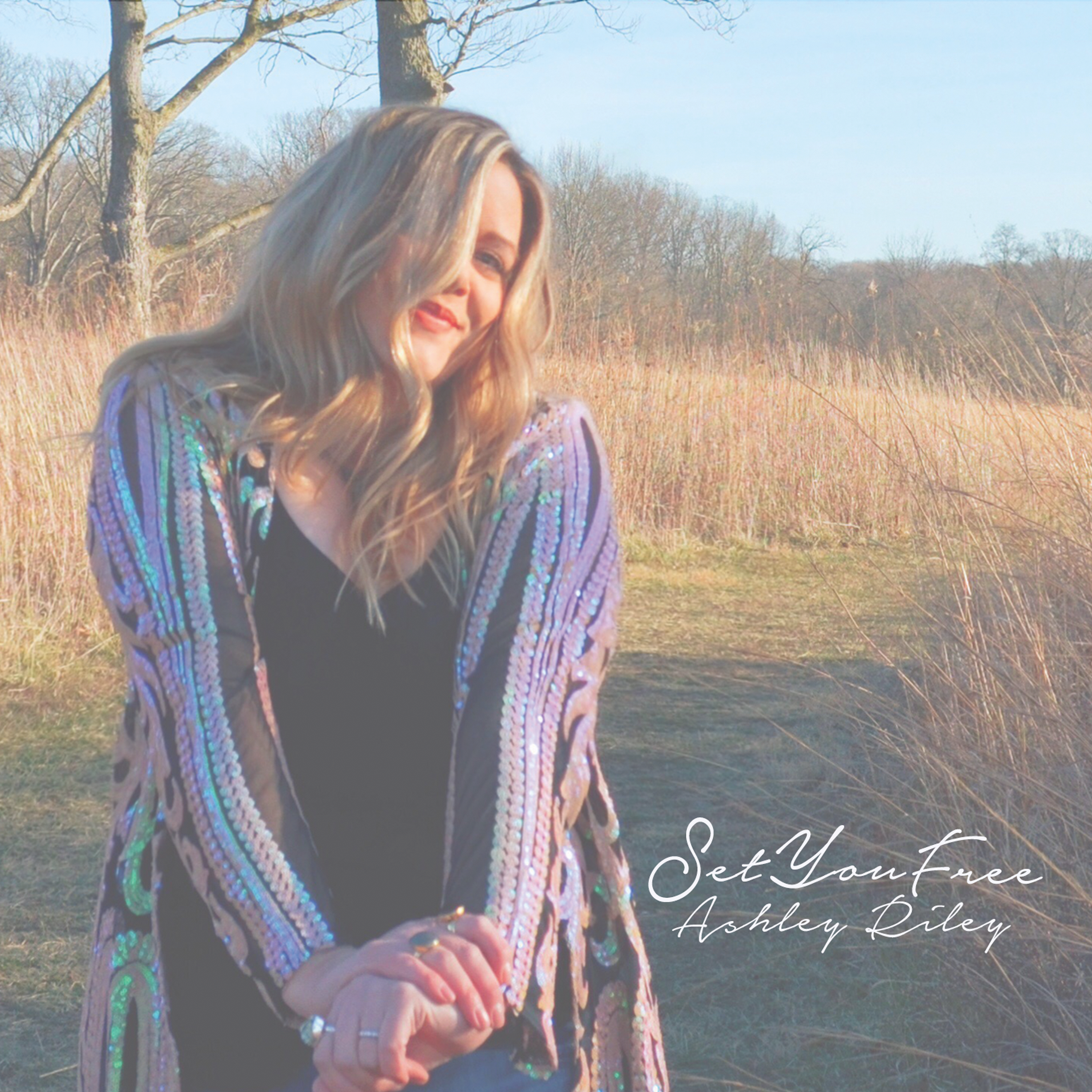
Today, we get an early look at Set You Free, the latest release from Decatur, Illinois singer/songwriter Ashley Riley. Join us as we connect with Riley for some exclusive Q & A and take a deep dive into the new album!
We often speak of authenticity when writing about music—especially in the Americana scene. Sometimes we simply mean the works reflect the roots of the artist. Swampy rock for a Louisiana band; foot stomping bluegrass from the Appalachian foothills. Other times we simply mean the artist has stayed true to a particular sound. However, authenticity can also be gleaned from a singer’s delivery. You can often tell if the words have personal meaning to the artist, rather than simply being text set to music, which is exactly what Ashley Riley was able to capture on her latest album, Set You Free. Thanks to her always expressive, often aching, sometimes raw, vocal delivery, she leaves no doubt we’re getting the real deal.
The album is built on introspection. For her songwriting, Riley connected with experiences both past and present for inspiration:
Mother Church Pew: This album is pretty darn magical, start to finish, and the songs fit together so well. Can you walk us through how you came to gather this collection of songs into one living, breathing album?
Set for independent release this Friday, June 18, Set You Free features a folksy, Americana vibe at its core. However, just when you think you have the album’s sound pegged as an aching folk album, Riley mixes in unmistakable elements of classic country along with hints of jazz, rock, and pop.
Album opener, “Close To Me,” is a cross between a classic, electric guitar humming country ballad and throwback airy folk-rock song. It’s a time machine that would feel right at home on both 80’s country radio or a 60’s folk rock channel. “Second Guessing” captures angsty vibes thanks to the addition of dark strings and the drummer’s focus on using the toms. Riley’s haunting vocals inspire easy reference to the style of Stevie Nicks. The Nicks and Fleetwood Mac comparisons return later in the album in the jazzier, “Oh Song.”
Mother Church Pew: Your sound is laced with Americana and more rootsy vibes, but there is also a slight pop luster to some of the tracks. How do you describe your music and your sound?
Ashley Riley: The way you put it definitely resonates. I love acoustic singer-songwriter music, folk, and really lo-fi albums, but I grew up listening to Top 40 radio, so as much as I’ve tried to emulate that stripped-down, singer-songwriter vibe, I’ve always thought my songs snuck a little bit of that pop sheen into them. I like to say that my sound is Dreamy Americana or roots-pop, so I think you hit the nail on the head.
I like to play around with genre; I love me a good, sad folk song, but I really dig the songs that are more rock (for me) like “Set You Free.” It’s really satisfying to play songs like that with a full band. Honestly, I love the emotions and energy that different music can evoke, so it’s fun to experiment with that.
Mother Church Pew: Building off the last question, where do you pull your musical inspirations from? Who are some of your favorite artists and how have they impacted you as a musician and lyricist?
Ashley Riley: I try to think of inspiration as being curious. If you’re curious about something, you can discover something new, and then you’re inspired. I get inspired by conversations, other people’s art, nature, traveling, TV shows — the list goes on. I love different points of view, and I’m always analyzing something.
As far as what I’ve learned from who inspires me, that list is also always growing, but I will list a few. Patty Griffin’s and Lori McKenna’s songs have shown me the beauty of writing about ordinary moments. Sheryl Crow’s and Tom Petty’s songs have taught me about using rhythmic melody and making songs singable for everyone. I’ve learned a lot about singing from listening to Jewel and Brandi Carlile. I really fell in love with Neko Case’s album, “The Fox Confessor Brings the Flood,” and her lyrics are so intriguing to me. I don’t always know what she’s talking about, but I kind of love that. Some of my current favorite artists in rotation are Erin Rae, Anna Tivel, and Lera Lynn. I can’t get Madi Diaz’s song “Nervous” out of my head — it’s so catchy!
Although present throughout the record, Riley’s emotional rawness is simply stunning on “Starting Over.” While you can feel the narrator is on the edge of losing control, there’s a touch of resolve as Riley puts forth the purest vocal performance on the album—letting just the slightest break creep in as the song ends. Is it a tale of finding comfort in moving forward or is it a cry for comforting support?
Mother Church Pew: Your lyrics have a lot of depth to them, with different lines having impact on repeated listens, sort of a peel-back-the-layers kind of experience the more time one spends with the songs. What is your writing process?
Ashley Riley: Thank you, that means a lot. I love to layer meaning if I can, and, if I’m being honest, sometimes I only realize it later. I definitely prefer to write when I’m inspired rather than having a regimented writing schedule, but I have found that even if I’m not inspired to sit and write a song that just sitting down with my guitar and singing anything will usually lead me down a path towards creativity.
Singing and creating, even just for myself, gives me a sense of peace, it’s like a runner’s high, but I don’t run, I sing, LOL. I try to sit down with my guitar at least a few times a week, usually late at night when everyone else is asleep or when I have the house to myself. I get a lot of good song ideas in the car or walking. I’ve heard it said before that there’s something about forward motion that breeds creativity, and I agree. Sometimes a snippet of a lyric or melody pops into my head, and I go from there, and other times I sit down with an idea that I’ve been thinking about. I usually finish a song in a day or two because when I’m in the zone I can’t leave it alone. I usually keep working and refining for a week or two, because I really like to play around with tempo, guitar pattern, and even melody, but I usually have most of the song done pretty quickly.
While one might wonder why an artist would be willing to share a diary’s view of her life, Set You Free is simply Riley’s honest and personal reflection of memories that have shaped her.
Mother Church Pew: What do you hope listeners to take away from Set You Free?
Ashley Riley: It’s been interesting as I listen back to this album in sequence, this one feels pretty personal, almost confessional at times. On my past releases I’ve had songs that were about other people or places that broke up the more personal songs, but on Set You Free, these are all songs I’ve personally lived, feelings I’ve had, things I’ve had to get over or make peace with. I hope that gives this album its strength. I hope that people take away that peace and strength that comes from putting yourself out there.
With that in mind and without further ado, Mother Church Pew is proud to present the streaming premiere of Set You Free by Ashley Riley. You can pre-order the album today here.
Connect with Ashley Riley:
Website | Facebook | Twitter | Instagram | YouTube | Spotify
Artist Featured Image Photo By Joe Riley
-
ALBUM REVIEW: BETH WHITNEY — ‘INTO THE GROUND’
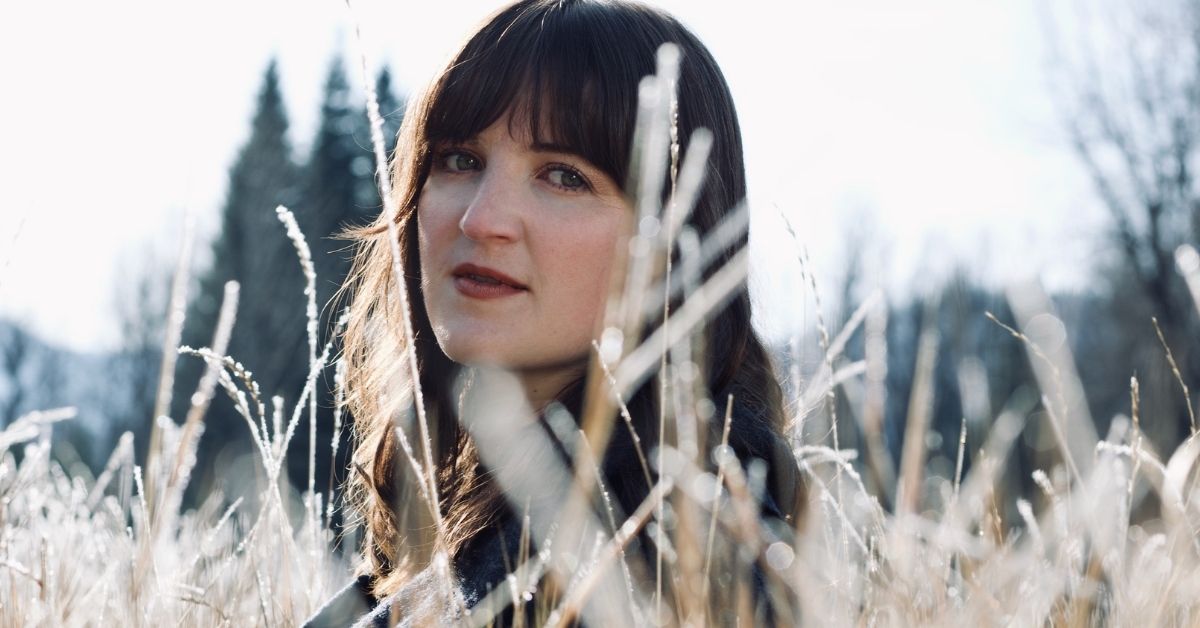

Washington State singer/songwriter Beth Whitney captures the spaciousness of her Pacific Northwest home and bottles it into the soundscape of her latest album, Into the Ground. Folk at its core, it grabs your attention with its sonic and stylistic twists. Released today, the 11-track album is a follow up to Whitney’s 2017 record, The Wild Unrest, and continues her exploration of both the feelings hidden in of the shadows of the world and the light of hopefulness.
With the mesmerizing opener, “Wild Roses,“ Whitney lets us know that she didn’t set out to make traditional singer/songwriter fare. Instead, we start with a track loaded with dark cello and a vocal hum that feels inspired by both new age and progressive rock influences. It has a unique sound—not just compared to the rest of the tracks on the album, but in a much broader sense across the folk and Americana genres.
While nothing sounds quite like “Wild Roses“ on the remainder of Into the Ground, she continues to push boundaries on the rest of the album. Whitney often tiptoes a fine line where you could absolutely envision each track being showcased at AmericanaFest or Newport Folk Festival, but feel like they could be a bit poppy in their sound for traditionalists. A prime example is the outstanding “Wild Horse,“ that features enough folk-pop-country inspired sounds that it would fit right in with Taylor Swift’s recent, more mature style. “Whole Heart“ has a similar popicana vibe both in presentation and its hooky refrains that just beg to be scream-sung by a crowd now that concerts are returning.
Later in the album “Thunder,“ (which rivals “While Roses“ as the standout track) feels powerful thanks to well placed eruptions of electric guitar, piano, and drums. However, Whitney’s gentle-yet-confident vocal delivery and the strummed acoustic guitar make it feel intimately vulnerable. Another unique sounding track, it inspires one of most original comparisons this publication has ever made: imagine if you took one of Billie Eilish’s slow-ballad tracks, added a touch of Courtney Marie Andrews’s powerful-yet-raw vocal quality, and topped it off with an occasional touch of guitar twang.
“I Go“ is straight-up vocal-forward folk. It has a lovely richness thanks to the addition of vocals from singers Gina Belliveau and Brittany Alvis. The trio of voices give us one of the album’s most traditional singer/songwriter pop-folk work, but still feels like it has a modern touch. While you may notice slight differences between each singer’s vocal tracking that makes them feel distant from each other, the vocals themselves still make this song a strong offering. One final surprise on the album is Whitney’s cover of “Shelter From the Storm.“ It can be a risky venture covering Bob Dylan, but Whitney pulls it off in style. It’s often a cliché to say that an artist “made a cover her own,“ but that is exactly what Whitney did here, both with the banjo-led melody and by making the lyrics feel personal to her.
The more you listen to Into the Ground, the more you appreciate Beth Whitney’s bold approach to folk music. There’s a layer of comfort thanks to the traditional elements we look for in an Americana album: moving lyrics, a little rock, an occasional touch of twang in the guitar, and stirring vocals. However, Whitney’s nuanced use of pop influences makes it distinct, welcomingly expanding the realm of Americana.
Connect with Beth Whitney:
Website | Facebook | Twitter | Instagram | YouTube | Spotify
Featured Image of Beth Whitney by Eratosthenes Fackenthall
-
ALBUM REVIEW: KRIS ANGELIS – ‘THE SKIES WE LOOK TO’ EP


Flashback to 2019: Singer/songwriter Kris Angelis is on tour. Not just any tour mind you. Instead, Angelis embarked on a journey that resulted in her performing in all 50 states. Then 2020 hit and touring was on pause. Angelis used this time to reflect. She embraced the clarity of silence, examined past experiences, and created. The result is her latest EP, The Skies We Look To, an album that has sections of joy and hope, yet is clearly shadowed by the pensive brooding many of us have recently felt.
Album opener “I’d Give Anything” uses its jaunty fiddle and foot stomping beat to put an optimistic spin on lyrics loaded with regret. While it’s not twangy, it has all the elements of a good folksy, country song. It’s a natural evolution from the artist’s heavy touring days to the confines of the studio, as the recording does an excellent job of simulating the energy of a live performance. Later, we get another country influenced track with “20 Miles To Empty.” The galloping rhythm creates a sonic metaphor, like tires on the creases of the road or a train roaring down the track, time and miles passing by. Angelis projects confidence in both her lyrics and vocal inflection that feels raw yet refined.
While all seven songs on The Skies We Look To feature smart storytelling, a trait coveted in Americana, it doesn’t get locked into a single musical style. Like the genre itself, Angelis explores a variety of influences to present her works. On “My Quiet,” Angelis shifts to a more pop-folk sound. With minimal acoustic guitar backing for most of the track, Angelis’s vocals are pulled to the front, almost floating above the track. However, the addition of piano and gentle drum rhythm accents the growing passion of the lyrics. “Flicker” has a unique sound that’s filled with ominous fiddle and a heavier drumbeat. The song gives the idea of embracing passion a different twist. The mysterious chords transform it into a tale of breaking through darkness, instead of the typical moonstruck-by-love fare that’s too commonplace. “That Wine Stain” combines a delicate melody with the most aching lyrics on the album as she sings about love—with a partner who suffers from addiction. The song seemingly ends abruptly before a chorus of strings plays out the rest of the album. You can’t help feeling like the painful relationship ended in tragedy.
With The Skies We Look To, Kris Angelis has assembled a group of songs that highlight her ability to not just write compelling lyrics, but also present it in a way that makes you feel the emotion behind the words. It’s an album that’s rooted in storytelling told through divergent folk influences making it a quality listen for any Americana music lover.

Website | Facebook | Twitter | Instagram | YouTube | Spotify
-
SONG PREMIERE: SWIFT SILVER – “COME ON HOME TO YOURSELF”


Born in Hernando, Mississippi, a small town between Memphis and the Mississippi Delta, Anna Kline comes from a long line of musicians, singers, and artists. Multi-instrumentalist John Looney was born in the mountains of Southwest Virginia and raised in Mt. Sterling, Kentucky. Together, they make up the delta-bluesy, folk rock outfit, Swift Silver. A new creative project for the pair, Swift Silver is eagerly anticipating the release of their self-titled album on June 4. While this may be their first record together as Swift Silver, the duo have a lengthy history of collaboration, having previously released music under the moniker Grits and Soul.
Today, Mother Church Pew is proud to premiere the second single from the band’s forthcoming record. Recorded at Fat Baby Studios, the muddy rocker, “Come On Home To Yourself,” features a complete taste of the delta from its swampy electric guitar riffs to Kline’s straight from the heart, soulful vocals. It could easily be called quintessential blues rock—but that would take away from some of the nuances in the song’s rhythm and guitar playing that give the track its distinct sound.
The song pays homage to Kline’s connection to her Mississippi roots and her affinity for the culture that thrives along the famous river. Kline shares with Mother Church Pew:
“‘Come On Home To Yourself’ is a love letter to the alluvial dirt of my native Mississippi and the river bluffs of Memphis. It’s a love letter to myself and a love letter to anyone who may need to hear it. Despite the Corps of Engineers’ best efforts, the Mississippi River continually pushes back against the system of locks and levees, testing the system of man-made confinement, ultimately following its own path all the way to the Gulf of Mexico. I’ve always felt a deep kinship to the River. I admire that fearlessness.
Inspired by Mississippi Fred McDowell, Sister Rosetta Tharp, Freddie King, early ZZ Top (to name a precious few), this track came to life in the studio. Kenny Miles (co-producer, engineer, and bass player) helped us craft this magnetic energy and dynamic within the arrangement. Barreling forward as it does with brother Hayden Miles’ low, rumbling bass drum rolls and keyboard pads like a big storm heading across the river from Arkansas. My partner, John, is versed in the ways—as Lowell George of Little Feat would say—conjuring up those infectious, swampy guitar licks that run through you, that feels like a jolt of electric excitement.”Without further ado, Mother Church Pew presents “Come On Home To Yourself” by Swift Silver:
Connect with Swift Silver:
Website | Facebook | Twitter | Instagram | YouTube | Spotify
-
BYRD’S CREEK MUSIC FESTIVAL ANNOUNCES 2021 LINEUP

Music festival lineups are sprouting up faster than spring flowers and it looks like 2021 is going to be a great year to hear live music! With most of the festivals planning for the fall, you may be looking for some summer plans. Enter Byrd’s Creek Music Festival which is scheduled for July 8-11 in Crossville, Tennessee.
The festival announced its initial lineup a couple weeks ago and has now added additional artists. There’s more than enough to please all Americana, folk, and bluegrass fans from casual to aficionado. It’s hard to resist the toe-tapping string band music from Lost Dog Street Band, the gothic, traditional country of Sierra Ferrell, or the classic Americana/folk of Eric Bolander. The recent additions include If Birds Could Fly, Daytripper, and Sad Daddy with Melissa Carper. In case you missed it, Carper recently released a gem of a traditional country album that’s still ranking high in the Americana Music charts! We have made a Spotify Playlist for you to explore. We guarantee there’s something you’ll like.
We of course understand that many of you are going to be extra careful this summer. We are too. However, it looks like Byrd’s Creek is taking a bunch of extra steps to keep safety in mind. Mother Church Pew visited the festival in 2018 and was pleasantly surprised about how the limited number of tickets made it feel special. For 2021, Byrd’s Creek is promising extremely limited ticket sales to help keep crowd contact minimal and to ensure compliance with any health mandates. Additionally, hand washing stations will be placed throughout the grounds. Also, if you choose to camp at the festival, the camping area is spacious allowing plenty of room for social distancing.
Tickets are on sale now and as we noted, they are extremely limited. Options include General Admission with camping, VIP, and the Oaklawn Farms “Friend of the Farm” Pass. If this year’s festival follows the pattern of prior years, the live music will start on Friday. You can get additional information on the Byrd’s Creek Music Festival website here. We can’t wait to see you in July!
Connect with Byrd’s Creek Music Festival:
Website | Facebook | Instagram
Mother Church Pew’s Past Coverage of Byrd’s Creek Music Festival:
-
ALBUM REVIEW: D.L. ROSSI — “LONESOME KIND”

I don’t think I want to
but I’m gonna’ give up pretty soon.
It’s been the first thing that I think about
and before I fall asleep at two.
But there comes a time when a man…
he has to face to face some hard truths.
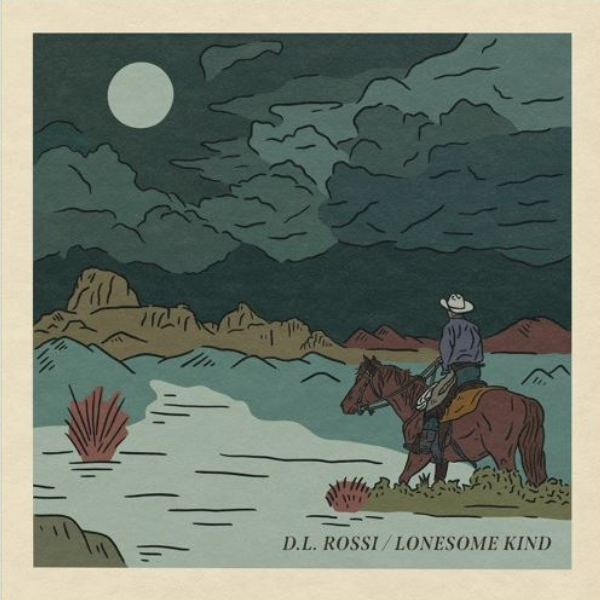
From “True Blue”From these opening lyrics, D.L Rossi lets us know that his latest album, Lonesome Kind, is a work of emotional honesty. Through the course of 10 songs, he reflects on his life’s journey and the personal struggles that have framed his introspection. After fighting (and overcoming) testicular cancer, working through divorce, and experiencing a nervous breakdown, Rossi writes with a unique perspective about how our lives are full of beginnings and endings. Yet while the album often has a solemn feel, it’s never mired in self pity or angst. Instead, thanks in part to the rich musical backing and touching harmonies, the songs take on a feel of growth and renewal.
Album opener, “True Blue,” (quoted above) stands out as a mood-setter. Early on, you can feel the artist’s turmoil as he searches in the darkness of his thoughts in a way that inspires comparisons to John Moreland. However, as the song plays on, we feel some light being cast upon Rossi’s shadows. The subtle way that Rossi uses vocal inflection and a slight musical build to highlight this evolution is particularly noteworthy. Later, “Great Lakes State Line,” captures the turmoil of a person reflecting on how his hometown and childhood influenced his life. In his musings, we feel the artist working to reconcile his past with who he has become. The challenges of figuring out growing up weigh on the artist’s mind throughout the album.
These songs are wonderfully contrasted by other, (slightly) more up-tempo highlights from the record. “Tumbling,” which explores Rossi’s efforts to start dating again in his 30’s, is loaded with nostalgic soul-searching, yet it feels that the singer is at peace. It has a bit of a jangly Tom Petty quality to it with the added accent of a strong drumbeat. “Whiskey” has a different sound from the rest of the album, featuring a throw-back folk-pop vibe. Album closer, “Oak Tree,” gives the album a sense of resolution. With a huge build that even includes the addition of horns, the song makes you feel like everything is not okay yet, but there’s still hope for the future.
With Lonesome Kind, D.L. Rossi gives us an Americana album that demands us to recognize his talent as a songwriter. However, it’s his ability to load his vocals with emotional inflection, the perfectly paired instrumentation, and thoughtful production that makes it a great listen rather than simply a collection of well-crafted words. Rossi gives us poignant, yet approachable melancholy.
Website | Facebook | Twitter | Instagram | YouTube
Spotify | Bandcamp | Apple Music
Featured Artist Image Of D.L. Rossi By Rachel Hurley
-
PREMIERE: THE LADLES — “THANK YOU”
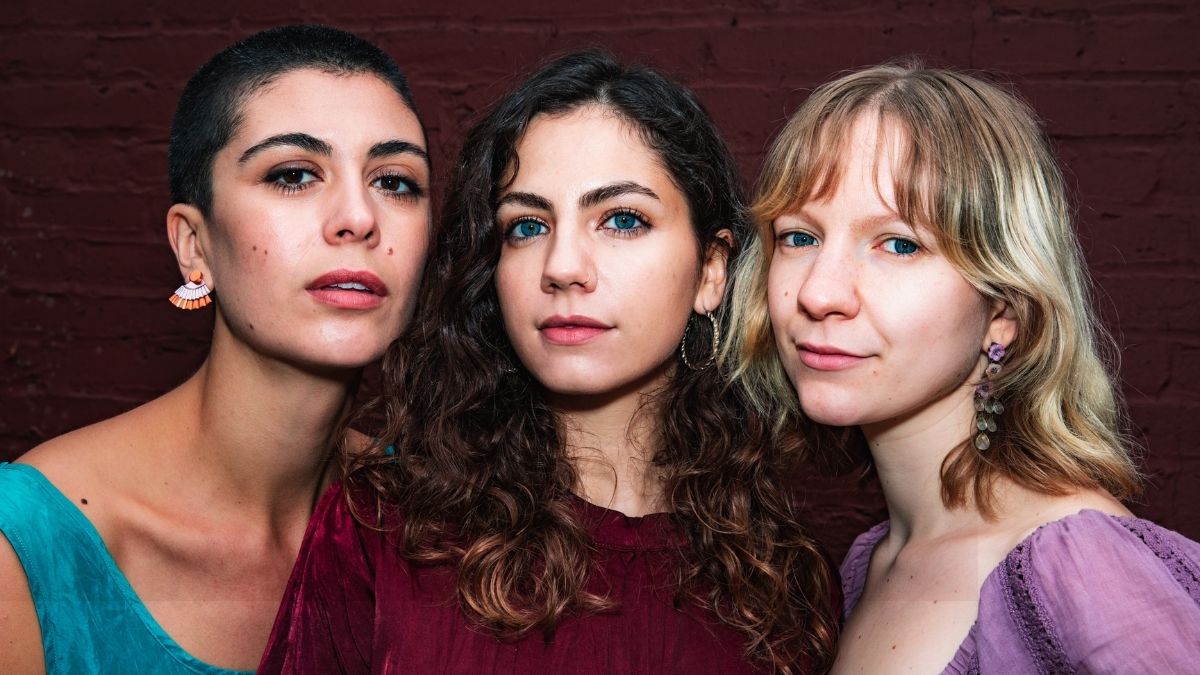

Why do our ears love three-part harmonies? Afterall, nothing can quiet a room or catch the attention of even the most jaded music aficionado as fast as three voices melding together. Maybe, it’s because, subconsciously, our brains remind our ears just how hard those harmonies are to successfully pull off. Not only does it require a collection of talented artists with complementing voices, but it also requires deft cooperation—an innate musical awareness to make sure the end result is indeed harmonies, instead of simply three artists singing together. On their latest single, “Thank You,” fiddler/singer Lucia Purpura-Pontoniere, guitarist/singer Katie Martucci, and banjoist/singer Caroline Kuhn, collectively known as The Ladles, showcase their mastery of this art.
One of the biggest challenges we see is the ability to capture the magic of three-part harmonies when putting them to tape. When performed live, the vocals are the star. Too often, in the recording studio, instrumentation and production fogs the picture. Thanks to both circumstance and smart production, “Thank You” masterfully captures the true soul of the harmonic experience. When 2020 led to massive pauses in both touring and music production, The Ladles isolated themselves in a three-week summer residency in the quaint little town of Springville, New York. The creative energy from that time was bottled into their upcoming album, The Springville Sessions.

The Ladles Springville Sessions Album Art With the song’s creation during the uncertain times of 2020, and now released in the hopefulness that 2021 has brought, it is no wonder that it has a deep meaning for the band and their connection to the world. “’Thank You’ is a song of gratitude for one’s community. It was written after going through a difficult time – often when we are going through something, it can feel as if we are alone. But this song is the moment of recognizing all the people in your life that support you and carry you through, be it a close family member or someone who pays for your food ahead of you in line – small and large acts of kindness and love between humans,” Lucia Purpura-Pontoniere shares.
The song feels like a spontaneous flow of appreciation. Musically, it’s well balanced—a gentle current of banjo keeps the song minimal behind the vocals, but lush fiddle and acoustic guitar builds throughout. A comparison to songs by I’m With Her is apt, yet almost too obvious. Thanks to The Ladles’ ability to keep the vocals in the spotlight, the harmonies of Mountain Man also quickly spring to mind while listening to the track. However, Lucia Purpura-Pontoniere, Katie Martucci, and Caroline Kuhn combine for the distinct sound that belongs to The Ladles.
Without further ado, Mother Church Pew is proud to present the exclusive premiere of “Thank You” from The Ladles. You can show your thanks to these talented artists by following them on social media and spreading the word about their upcoming album, The Springville Sessions.
-
NEW LYRIC VIDEO: NASHVILLAINS — “TUMBLING DOWN”

“When faced with the loneliness of tragedy, the only thing left is to take another step. Surrender is never an option,” Nashvillains’ vocalist Troy Johnson tells us about the freshly released lyric video for the band’s latest single, “Tumbling Down.”
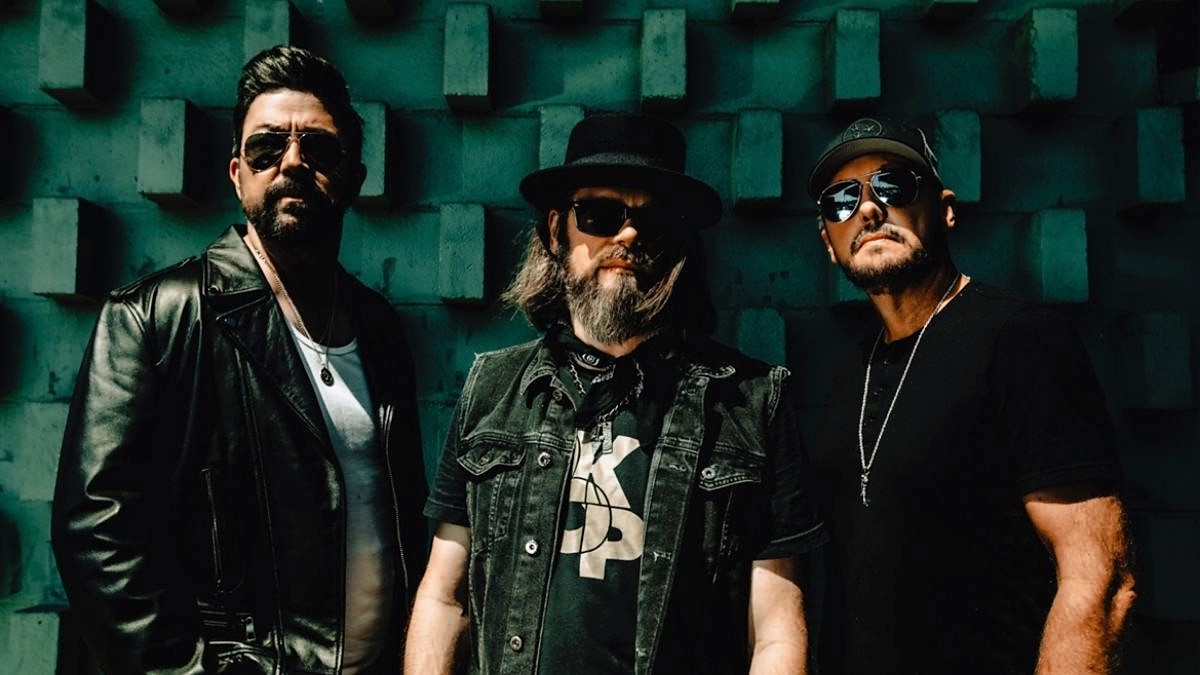
With “Tumbling Down,” the Nashvillains, a newer creative project, have now released two singles as a band. However, the trio, consisting of Troy Johnson, Brett Boyett, and Scott Lindsey, are no strangers to the Nashville and country music scenes. Collectively, they have written and produced music for feature films, television shows, and major artists like The Chicks, Keith Urban, Cassadee Pope, James Taylor, and Lauren Alaina.
The video features plenty of somber imagery highlighting the song’s musing reflection on coping with adversity. The track has a particularly strong meaning to the group as they faced overwhelming crises, both global and personal, including one band member’s fight with cancer.
“We wanted to write something that painted a picture of the chaos in the world and the hardships that we all endure. This song has been an autobiographical journey for many of us in the band,” shares “Tumbling Down” co-writer, Brett Boyett.
Blending traditional instrumentation with a slight rock edge—and adding in Johnson’s distinctive, deeper vocals—the song has an outlaw quality. It feels like a throwback to the days when country music put a premium on musicianship and emotional lyrical depth. However, the notably crisp production reminds us that we’re indeed hearing a song blessed with the benefits of today’s technology and engineering knowhow. With “Tumbling Down,” the Nashvillains join the growing revolution of artists embracing the history of country music and bringing it to a modern audience.
Without further ado, please enjoy “Tumbling Down” by the Nashvillains and keep your ears out for the release of the band’s upcoming album through Fate Entertainment.
Website | Facebook | Twitter | Instagram | YouTube | Spotify | Apple Music
Nashvillains Band Photo Credit For Featured Image: Annie Noelker